

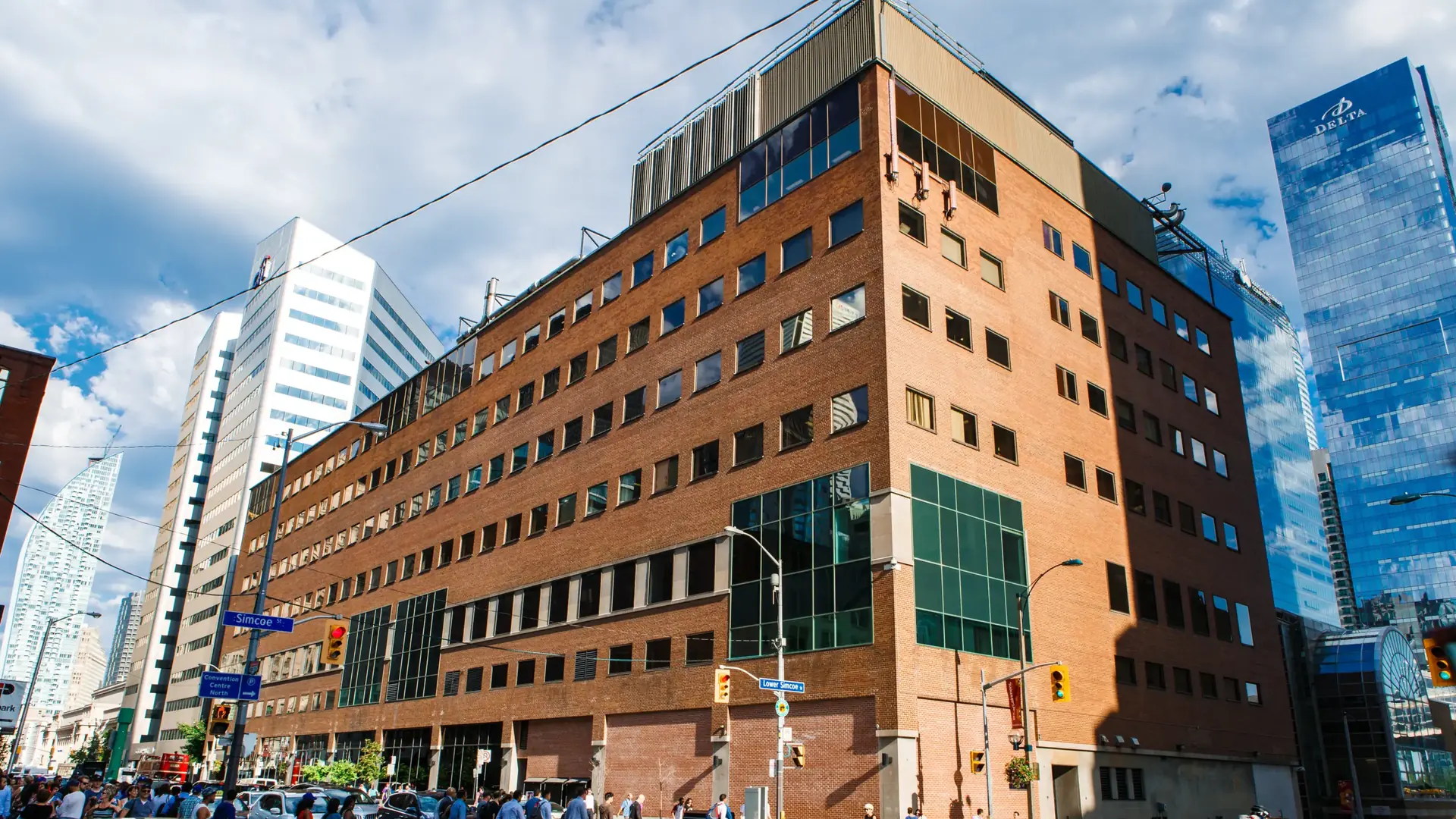
- Amanah holds its own Autonomous System Number, AS32489, and runs BGP multihoming across five networks at 151 Front Street West: Beanfield, Cogent, Zayo, NetActuate and TorIX.
- Most colocation providers resell one upstream carrier, so every customer in the building inherits that single carrier’s outages, congestion and peering disputes.
- BGP multihoming means the best path is chosen for every packet in real time, out of five independent route calculations, rather than fixed by one carrier’s routing table.
- Direct TorIX peering plus four transit carriers reaches more than 400 networks without depending on any single one of them.
- It is part of how the network is built, not a premium add-on.
BGP multihoming is the line between an internet service provider and a bandwidth reseller. At 151 Front Street West, Amanah is multi-homed across five carrier-neutral networks and runs the Border Gateway Protocol to pick the best path out of all five for every packet, continuously. That is not a reseller relationship. That is running a network.
Ask most colocation providers who their internet provider is and you will get one name. That single answer is the whole risk profile: one company’s outage, one company’s congestion, one company’s peering disputes, all inherited by every customer in the building.
We built 151 Front Street West differently, and it is worth explaining why, because the difference is invisible until the day it matters.
What actually makes a provider an ISP rather than a reseller?
An ISP is not defined by owning fibre in the ground. It is defined by one capability: holding your own Autonomous System Number and running BGP to advertise routes and choose paths across multiple upstream networks. That is the technical line between being connected to the internet and being part of the internet’s routing fabric.
An Autonomous System Number (ASN) is the globally unique identifier that marks a network as an independent participant in internet routing. Networks that hold one announce their own routes and set their own policy. Networks that do not are downstream of somebody who does. Amanah operates AS32489.
Most colocation and hosting providers sit on the wrong side of that line. They buy a single upstream connection, usually from a Tier 1 or Tier 2 carrier, and resell bandwidth on top of it. Their network engineering stops at “is the link up”. Ours does not stop there, because we operate our own ASN and make our own routing decisions across five independent networks. You can see the current shape of that build on our network page.
What is BGP multihoming, in plain terms?
Multihoming means connecting to more than one upstream network at once. BGP multihoming means running the Border Gateway Protocol over those connections so the routers actively choose between them, per destination, and shift traffic when conditions change. Two links with no protocol deciding between them is not multihoming, it is a spare cable.
BGP itself is standardised in RFC 4271. Every network on the internet uses it to announce which destinations it can reach, and each announcement that passes through another network adds a hop. The protocol is what turns five separate cables into one continuously optimised exit from the building.
Why five networks, and why one of them is an exchange
Five is not a round number picked for a marketing stat. Each network brings different peering relationships, different international transit paths, and different congestion patterns at different times of day.
| Network | Role in the mix | What it contributes |
| Beanfield, Cogent, Zayo, NetActuate | Transit carriers | Four independent routes out of the building, each with its own peering relationships, international paths and congestion profile |
| TorIX | Internet exchange | Direct traffic exchange with other networks physically present in Toronto, often skipping transit altogether |
The Toronto Internet Exchange (TorIX) is the piece that changes the arithmetic. Direct TorIX peering plus four transit carriers gives us reach into more than 400 networks, the figure our meet-me room breakdown puts on 151 Front Street West, without depending on any single one of them.
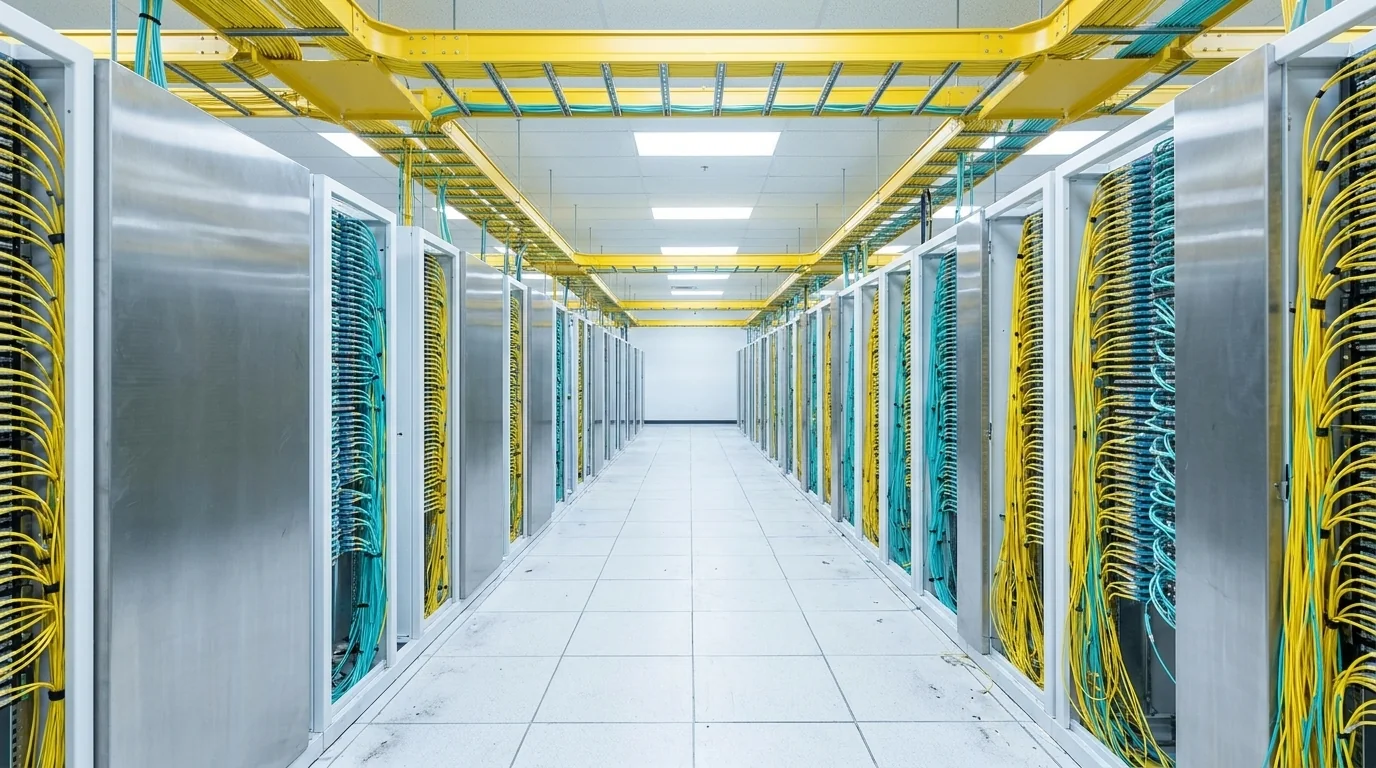
If any one carrier degrades, has a fibre cut, or a bad peering day, your traffic has four other ways out of the building. That redundancy is only meaningful if something is actively deciding which path to use. That something is BGP.
What does “shortest path” actually mean in BGP?
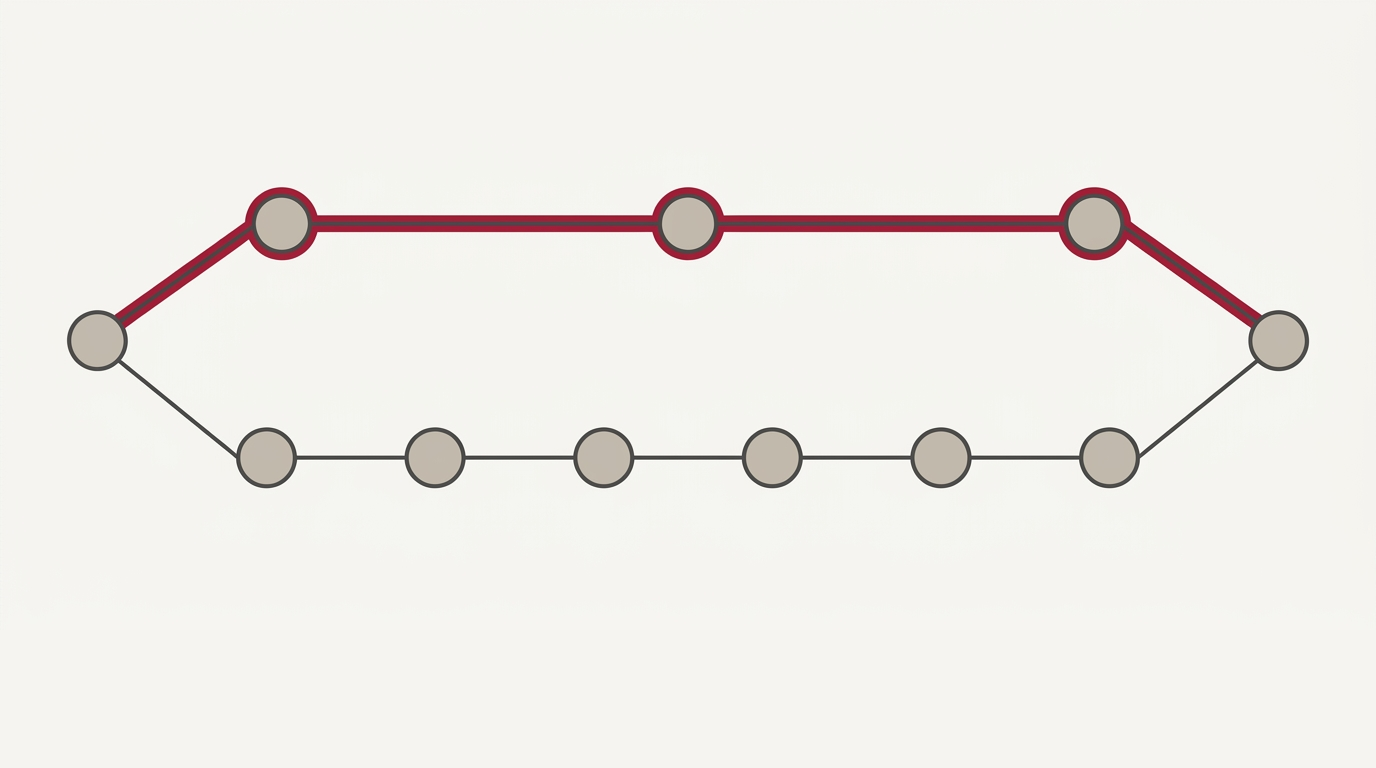
BGP does not route on physical distance. It routes on the number of network hops between us and the destination network, along with the policy preferences we configure. Multiple upstreams means multiple candidate paths for every destination, so we can select the one with fewer hops or better performance rather than being stuck with whatever one carrier happens to offer that day.
Here is the mechanic in plain terms. When your server sends a packet to a customer’s office network or a SaaS platform, that destination announces its existence to the internet’s routing tables through BGP. Every network in the path repeats the announcement, and each repetition adds a hop. A route that crosses three networks is generally preferred over one that crosses six, because fewer hops usually means less latency and fewer places for something to go wrong.
To be precise about what that does and does not promise: we are not publishing a per-destination latency table, and multihoming is not a guarantee that any given route is faster today than a single carrier would have given you. What it guarantees is choice. Five candidate paths, our own policy deciding between them, and somewhere to move when one of them turns bad.
With one upstream carrier, you get one calculation of that path, whatever that carrier’s own network happens to produce. With five, we see multiple independent calculations at once, and our routers select the best available option per destination, continuously. If one carrier’s path to a particular network degrades, we can shift that specific traffic to another without anyone downstream noticing, because the decision happens at the network layer before the packet ever reaches a bottleneck.
What happens when one carrier degrades rather than fails?
A carrier does not have to go fully down to become your problem. Congestion, a bad peering handoff, or a regional outage can quietly slow traffic to specific destinations while everything else looks fine on a status page. Multi-homing with active path selection catches that, because there is something to compare against. A single-carrier setup has nothing.

This is the failure mode that costs people the most and gets diagnosed the least. The link is up, the monitoring is green, and one application is slow for one set of users. Route diversity turns that from a mystery into a routing decision.
Single-carrier colocation vs BGP multihoming
| Single upstream carrier | BGP multihoming across five networks | |
| Path selection | Whatever that carrier’s routing table produces | Best of five independent calculations, per destination |
| Carrier outage | Wait for the upstream to fix it | Traffic shifts to the remaining four automatically |
| Partial degradation | Nothing to compare against, so often undiagnosed | Detected by comparison and rerouted |
| Peering reach | That one carrier’s peers | More than 400 networks, including direct TorIX peering |
| Who decides the route | The carrier | Amanah’s own ASN and routing policy |
| Cost to the customer | Bundled, with no alternative | Included in the facility, not a premium add-on |
Why does 151 Front Street West make short paths possible?
151 Front Street West is Canada’s premier carrier hotel, the building where most of the networks that make up the Canadian internet physically meet and exchange traffic. Being inside it puts a network as close as it can get to the core of Canadian internet infrastructure, which is exactly why TorIX, the country’s largest internet exchange, operates from here.
Practically, that proximity is what makes short paths possible in the first place. A network hop is not free distance. It is a router, a cable run, and a handoff, and every one you avoid is latency you do not pay. Sitting inside the building where networks interconnect means many of our shortest paths are also physically the shortest, not just the fewest hops on paper. The meet-me room at 151 Front Street West is where that interconnection physically happens, and a cross connect is how your cabinet reaches it.
What this means for your workloads
For most workloads, network path selection is invisible until it fails. A VoIP call that gets choppy, a database replica that falls behind, an API that times out under load: all of these can trace back to a routing path that degraded rather than a server that failed. Single-homed infrastructure has no answer when that happens beyond waiting for the carrier to fix it.
Running our own ASN and BGP sessions across five networks means the decision sits with our own routing policy rather than in an upstream support queue. Your applications get route diversity you did not have to build or pay for separately. That applies whether you take colocation at 151 Front Street West or buy IP transit from us directly. You get carrier-grade path selection as part of the facility, not as an add-on.
Bring us a destination that matters to you.
Your head office, your backup site, the SaaS platform your staff live in all day. We will show you what our routing table sees for it across all five networks. Or come and look at the hardware: the meet-me room and the carrier connections behind these routing decisions are ten minutes of a tour.
Questions about this topic
A globally unique number that identifies a network as an independent participant in internet routing. A provider that holds its own ASN announces its own routes and sets its own path policy. A provider without one is downstream of somebody who does, and inherits their routing decisions. Amanah operates AS32489.
The protocol networks use to announce which destinations they can reach and negotiate the best path to get there, effectively the internet’s routing table, rebuilt continuously as conditions change.
No. It is part of how 151 Front Street West’s network is built, not a premium add-on. Every customer on our network benefits from the same five-way path selection.
Traffic that was routing through that carrier shifts to one of the remaining four, based on BGP path selection. There is no manual failover step and no interruption most customers would notice.
Major cloud providers also run their own networks with multiple upstreams, so the principle is similar. The difference is that on dedicated or colocated infrastructure you get that network-layer redundancy while retaining full control of your own hardware and software stack, without the shared-tenancy tradeoffs of cloud.
For workloads with specific latency or path requirements, talk to our network team. Custom routing policy is something we can discuss on a case-by-case basis.