
Part of our “Inside 151 Front” series – a technical look at the infrastructure behind Toronto’s most interconnected data center.
Choosing a data centre in Toronto comes down to eight checks: the suite, power, cooling, density per rack, interconnection, physical access, certification and the contract terms. Amanah Tech answers each of them from two suites inside 151 Front Street West: TOR1, which supports up to 15kW per rack, and TOR2, which supports up to 30kW per rack. Each check below says what to ask any provider, why the answer matters, and what Amanah’s own answer is.
151 Front Street West is a carrier hotel in downtown Toronto, a building where hundreds of networks meet and interconnect. Every tenant shares the address and the networks inside it. Power design, cooling, rack density, access control and contract terms are decided suite by suite, which is why the building alone does not settle the decision.
Amanah’s two suites in the building are built around:
- Dual A and B utility feeds, N+1 UPS and on-site diesel generators
- Enwave deep lake water cooling, with in-row cooling units in the suites
- 24/7 access with rack-level authentication and Verkada access control
- Interconnection through meet-me rooms MMR1 to MMR3, with more than 400 networks reachable in the building
- One certification, SOC 2 Type II, and four compliance regimes
The address is the same for every tenant in the building. The suite is what a customer actually buys.
So the decision starts with the suite.
Start with the suite, not the building
A data centre building is a location, and a suite is the product a customer signs for. Power, cooling, rack density, access control and contract terms are all set at suite level, so two customers under one roof can be buying very different things. The first question on any shortlist is which suite the racks would sit in, and what that suite is rated for.
Amanah Tech operates two suites at 151 Front Street West, Toronto, Ontario M5J 2N1. TOR1 is Suite 341 on the third floor. TOR2 is Suite 616 on the sixth floor. That address is the facility where customer hardware lives, not Amanah’s business office, and a colocation contract should name the suite as well as the street address. Current availability in either suite is confirmed on request rather than published, because it changes.
A quote that names no suite, or a single building-wide figure for density or power, answers a building question when the buyer asked a suite question. Ask for the suite number and the floor before comparing anything else, because every figure that follows depends on it.
Power: what redundancy actually means
Power redundancy means no single component failure can take a rack offline: two utility feeds, a battery layer that bridges an interruption, and generators that carry the load through a longer outage. Each layer answers a different failure, so a buyer should ask about all three and not accept the word “redundant” on its own.
Amanah’s power design at 151 Front Street West has three layers. Dual A and B utility feeds give the racks two independent supply paths. N+1 UPS means there is at least one more uninterruptible power supply unit than the load requires, so one unit can fail or be serviced without dropping the load. On-site diesel generators take over when utility supply is lost for longer than the batteries are designed to bridge. In TOR2, Amanah adds 500kW of redundant capacity.
The most useful power question is whether a provider’s figure is an architecture claim or a contractual one. Most power figures in the market are architecture claims: they describe what the facility has installed, not what a contract pays out on. Amanah states its power as architecture on purpose and attaches no percentage to it, so a buyer can judge the design itself: two feeds, N+1 UPS, generators on site, and dedicated redundant capacity in TOR2.
When comparing providers, ask how the feeds reach the rack, what the UPS redundancy level is, whether the generators are on site, and how much redundant capacity is set aside for the specific suite being quoted.

Cooling, and why the lake matters
Cooling decides how much heat a rack can shed, which in turn decides how much power a rack can really use. The questions are where the cooling comes from, how it reaches the rack, and what happens when one mechanical component fails.
Amanah’s suites at 151 Front Street West use Enwave deep lake water cooling. Cold water is drawn from Lake Ontario at a depth of 83 metres, used for heat exchange, and returned, and the system uses no refrigerants. The distinction worth holding onto is water circulated against water consumed: lake water passes through the heat exchange and goes back. A buyer comparing water claims between providers should ask which of those two figures is being quoted.
Inside the suites, in-row cooling units sit between the racks, close to the heat source, and hot and cold aisle containment keeps supply air and exhaust air apart so cold air reaches the equipment intakes without mixing in the room. TOR1 runs N+1 mechanical cooling, meaning one more cooling unit than the load needs. TOR2 has more than 100 tons of cooling dedicated to the suite.
Ask any provider how cooling is delivered to the rack, what the redundancy level is in the suite being quoted, and whether the cooling capacity was sized for the density on offer in that suite.
Density per rack, and why the number means nothing without a suite
Rack density is the maximum power one rack can use, stated in kilowatts, and it only means something when it names the suite it applies to. Amanah publishes two figures, one per suite: TOR1 supports up to 15kW per rack, and TOR2 supports up to 30kW per rack.
The two suites differ by a factor of two, which is the whole reason to name the suite. A building-wide “up to” figure is correct for one suite and wrong for the other. A provider that says it supports high density without a number, or gives a number without a suite, has not answered the question.
Density also has to be read alongside power and cooling. A rack rating is only useful when the circuits, the redundant capacity and the cooling around it were sized for it, which is why TOR2 pairs 30kW per rack with 500kW of redundant capacity and more than 100 tons of dedicated cooling.
Footprint is the other half of the rack question. Amanah’s colocation starts at a single 1U and scales to quarter racks, half racks and full cabinets, so a deployment can grow without changing provider. Ask what the maximum density is in the exact suite being quoted, and whether a deployment can move to a larger footprint or a higher density later.
Interconnection: who you can reach from the floor
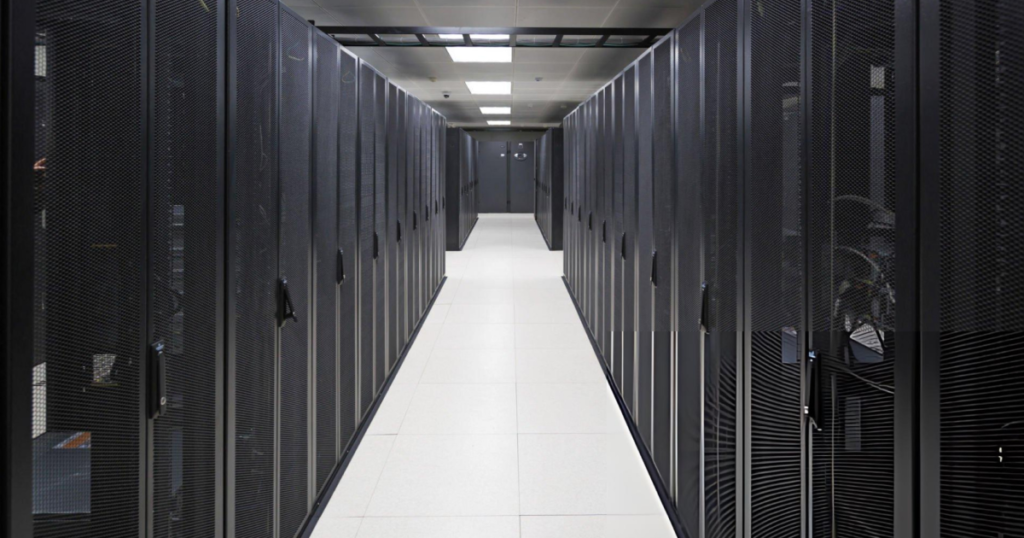
Interconnection is the set of networks a rack can reach directly, by cable inside the building, without leaving it. In a carrier hotel that set is the main reason to be there, so the questions are how many networks are reachable, how a customer connects to them, and which upstream networks the provider buys transit from.
Inside 151 Front Street West, more than 400 networks are reachable, and connections run through the building’s meet-me rooms, MMR1 to MMR3. A cross-connect there is a physical cable between two parties in one building, not a metro circuit between two sites, so cross-connects keep the path between a customer and a carrier inside the building.
Amanah peers at TORIX, the Toronto Internet Exchange, where more than 230 networks exchange traffic at 100G, according to TORIX. Amanah also operates its own autonomous system, AS32489, and has since 2004. Behind that network sit five upstream carriers with BGP multi-homing, so traffic has more than one path out. Three of the five are Cogent (AS174), Zayo (AS6461) and NetActuate (AS36236). Port speeds run from 1Gbps to 100Gbps.
Amanah Tech is carrier-neutral: a customer can use Amanah’s network, connect directly to a carrier present in the building, or combine the two. Ask any provider how many networks are reachable from the specific suite, which internet exchange it peers at and at what speed, how many upstream carriers sit behind its network, and whether a customer is free to buy transit elsewhere.
Access, security and who can touch your hardware
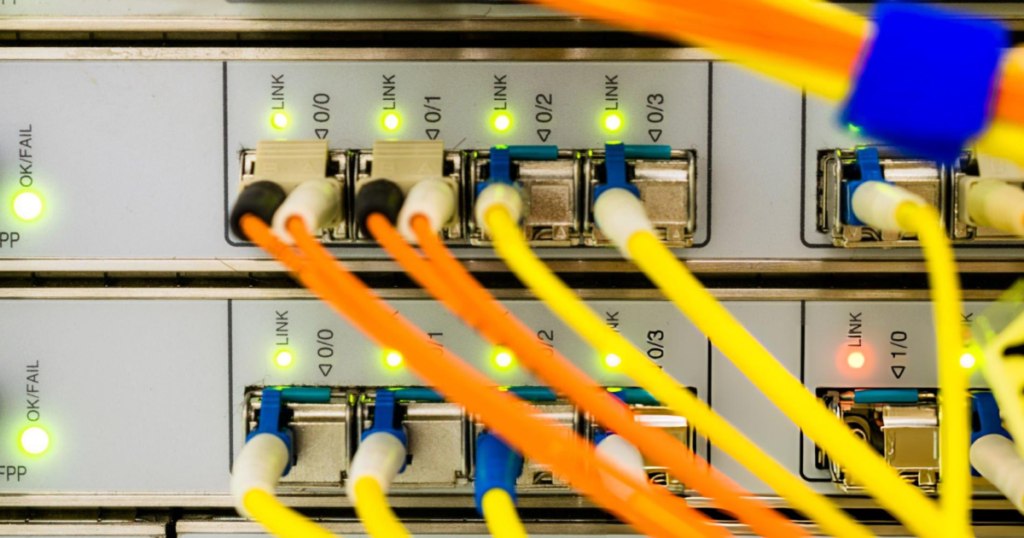
Access control decides who can stand in front of a customer’s rack, and a buyer should know how it is enforced at the building, at the suite and at the rack itself.
- Access hours: Amanah customers have 24/7 access to their equipment.
- Entry control: the suites use Verkada access control.
- Rack-level authentication: authentication applies at the rack, not only at the suite door.
Rack-level authentication is the last of several layers of physical security between the street and a customer’s hardware. In a suite shared by several customers, it is what separates one cabinet from the next: a suite door controls who enters the room, while rack-level authentication controls which rack that person can open.
Remote hands covers the times a customer cannot be on site. Amanah’s remote hands service is available from $100/hr for hands-on work a customer asks Amanah staff to carry out on their equipment.
Ask any provider who can enter the suite and how entry is controlled, whether authentication happens at the rack or only at the door, whether access is 24/7 or by appointment, and what remote hands costs and how it is requested.
Certification and compliance are not the same thing
A certification is an independent audit with a report behind it. Compliance means a provider’s practices meet a law or regulation, and no certificate is issued for it. Buyers who mix the two end up comparing lists that look alike and mean different things.
Amanah is SOC 2 Type II certified, and CCPA, GDPR, PIPEDA and PHIPA compliant. That is one certification and four compliance regimes. SOC 2 Type II is an independent attestation that tests controls over a period of time, and a procurement reviewer can ask to see the report. CCPA, GDPR, PIPEDA and PHIPA are privacy laws covering California, the European Union, Canada and Ontario, and complying with them is a statement about practices.
The buying lesson is simple. A provider that lists five “certifications” is either being imprecise or is wrong, and a procurement reviewer will ask for the report behind each one.
Data centre tiers are a separate scale again. The Uptime Institute’s Tier levels describe how much redundancy a facility design has, and certification against them is a formal process with its own documentation. Amanah does not hold an Uptime Institute Tier certification for TOR1 or TOR2. If a provider describes a facility by Tier, ask whether that is a certification or a description.
Availability figures need the same scrutiny. Amanah’s service level agreement sets 100% network uptime, a figure about the network alone. Ask any provider which part of the service its availability figure covers, and whether it is written into the contract.
The questions to ask before you sign
These are the questions a buyer can put to any colocation provider, and each one has a checkable answer:
- Which suite would my racks sit in, and on which floor?
- What is the maximum power per rack in that suite, in kilowatts?
- How are the racks fed: one utility feed or two, and at what UPS redundancy level?
- Are there generators on site, and how much redundant capacity is set aside for this suite?
- How is the suite cooled, and what is the cooling redundancy level?
- How many networks can I reach inside the building, and through which meet-me rooms?
- Which internet exchange do you peer at, and how many upstream carriers sit behind your network?
- Who can open my rack, how is that controlled, and can I get in 24/7?
- Which certifications do you hold, which items on your list are compliance, and can I see the audit report?
- Which part of the service does your availability figure cover, and is it in the contract?
- What does remote hands cost, and what are the contract term and renewal conditions?
Price belongs on the same list, and Amanah answers it in public. Amanah Tech offers a price-match guarantee: if you receive a comparable colocation quote from another provider, Amanah will match it and beat it by 10%.
The building sets the address and the network neighbourhood. The suite, and the answers a provider gives to these questions, decide what a customer actually gets.