
- A Tier 3 data center is built for concurrent maintainability: every power and cooling component can be serviced or replaced without ever cutting power to your equipment.
- Amanah designed and operates 151 Front Street West to the Tier III standard, with redundant, independent distribution paths, not spare parts on a single path.
- The result is 99.999% uptime, N+1 redundancy on every critical system, and zero downtime windows for planned maintenance.
- Amanah is not formally Uptime Institute certified, and says so plainly. It holds the facility to the same engineering bar and invites you to verify it in person.
A tier 3 data center is a facility engineered so that every piece of power and cooling infrastructure can be repaired, replaced, or upgraded without removing power from the load it serves. Engineers call this concurrent maintainability. It is the difference between “usually up” and no scheduled downtime, ever. “Reliable” is free to say. Meeting the Tier III standard defined by the Uptime Institute is not free to build. Amanah designed 151 Front Street West to that standard in concrete and copper, not just on paper.
Amanah has not pursued formal Uptime Institute certification, and is transparent about that. The facility is held to the same bar: redundant, independent distribution paths, not redundant parts sitting on one path. That second setup is how many “enterprise-grade” facilities are actually built, and it is where their outages come from. For the full picture, see this closer look inside 151 Front.
What does the Tier III standard actually require?
The Tier III standard requires concurrent maintainability: every critical power and cooling component must be repairable, replaceable, or upgradable without ever removing power from the load it serves. No maintenance windows. No brief interruption expected. No exceptions. It is delivered through redundant, independent distribution paths, so any single component can be pulled for service while connected equipment stays online.
The numbers behind how 151 Front operates
- 99.999% uptime, sustained 24/7/365. Five nines is not a target Amanah chases; it is what the architecture is engineered to produce as a baseline, backed by a 99.999% uptime SLA.
- N+1 power and cooling redundancy on every critical system, live and load-tested, not filed under disaster recovery.
- 400+ networks reachable through carrier-neutral connectivity, with direct TorIX peering.
- Zero outage windows for planned maintenance. Concurrent maintainability means engineers do their work while your systems stay online.
- 151 Front Street West, Canada’s premier carrier hotel, purpose-built to this standard from the ground up.
What does concurrent maintainability buy you in practice?
It means every layer between the utility feed and your rack has a second, independent layer standing behind it, already energized. Nothing has to be powered down for routine work. In practice that looks like:
- Generators and UPS units that can be taken offline for service mid-shift, with zero disruption to connected load.
- Precision cooling sized with redundant capacity, so a unit going down for maintenance never shows up as a temperature excursion in your rack.
- Multiple independent power distribution paths, so a fault on one path never propagates to the other.
- BGP multi-homing across carrier-neutral routes, so no single upstream network is a dependency you are exposed to.
For a technical leader evaluating infrastructure, that is the actual question to underwrite: not “is it usually up,” but “what specifically has to fail, simultaneously, for it to go down.” At Tier III, the answer requires two independent failures at once. That is the engineering basis for the uptime number, not a rounding of good luck. Cooling redundancy is sized against ASHRAE thermal guidelines so a unit can drop for service without a thermal event.

Data center tiers explained: Tier 3 vs Tier 4 and the rest
The four data center tiers describe increasing levels of redundancy and fault tolerance. Amanah builds 151 Front to Tier III, the level that eliminates downtime for maintenance and single points of failure without the cost and complexity most workloads never need.
| Tier | Design | What it means for you |
| Tier I | Single power and cooling path, no redundancy. | Any maintenance is scheduled downtime. |
| Tier II | Redundant components, single distribution path. | A component failure still exposes you. |
| Tier III | Redundant, independent distribution paths. The standard Amanah designs and operates 151 Front to. | Any component can be pulled for service or swapped after failure; connected equipment never sees an interruption. |
| Tier IV | Fully fault-tolerant, dual-active infrastructure end to end. | A legitimate standard, at a cost and operational complexity most workloads do not need. |
Bottom line on Tier 3 vs Tier 4: for nearly every workload (VPNs, SaaS platforms, VoIP systems, dedicated servers) Tier III delivers what actually matters. Tier IV adds fault tolerance for simultaneous, multi-system failures most businesses will never encounter, at a cost few need to carry.
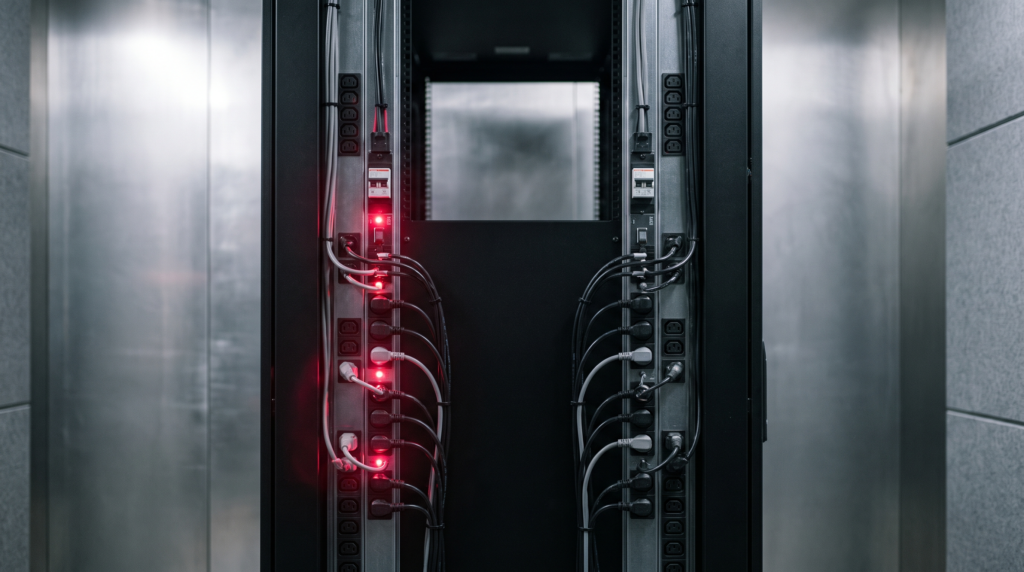
See the redundant paths for yourself
A UPS can die at 3am. A chiller can fail mid-afternoon. At 151 Front, your server has already stopped caring. Walk the power room. Walk the cooling plant. See the redundant paths that make 99.999% possible before you decide anything.
Ready to look? Talk to our team or book a free tour, or compare colocation options at 151 Front.
Questions about this topic
No, Amanah is not formally certified by the Uptime Institute. It designed and operates 151 Front’s power and cooling infrastructure to meet the Tier III bar, specifically concurrent maintainability across power and cooling, and is transparent that this is a standard it builds to, not a third-party certification it holds.
A facility design in which every critical power and cooling component can be maintained or replaced without shutting down the load it serves, on redundant, independent distribution paths.
Through N+1 redundant power and cooling on independent distribution paths, plus carrier-neutral, BGP multi-homed connectivity across 400+ networks. No single failure or maintenance event has a path to reach your equipment.
For nearly every workload (VPNs, SaaS platforms, VoIP systems, dedicated servers) the Tier III standard delivers what actually matters: no downtime for maintenance and no single point of failure. Tier IV adds fault tolerance for simultaneous, multi-system failures that most businesses will never encounter, at a cost few need to carry.
Ask one specific question: what happens to my equipment during your scheduled maintenance? At 151 Front, the answer is nothing. Then book a tour and see the redundant power and cooling paths for yourself.