
Walk one minute west of Union Station and you reach 151 Front Street West, a red brick office block beside the rail tracks. Inside, more than 400 networks share the building. A carrier hotel is a building where carriers, internet exchanges, cloud on-ramps and their customers sit under one roof and connect to each other directly. This guide explains what a carrier hotel is, how 151 Front Street West became one, and what an IT team should check before colocating there.
- A carrier hotel is a carrier-neutral building where networks interconnect through a meet me room and physical cross-connects, instead of across the public internet.
- 151 Front Street West was first wired in 1954 for CNCP Telex lines that ran along the railway, and its closeness to the tracks is still why networks gather there.
- The building hosts a node of TorIX, the Toronto Internet Exchange, where more than 230 networks exchange traffic.
- Many operators share one address. Power, cooling, compliance and pricing differ by suite, so buyers evaluate the provider, not the building.
What is a carrier hotel?
A carrier hotel is a data centre building whose main job is interconnection. Telecom carriers, internet service providers, content networks and enterprises lease space in the same building so they can link their equipment with a short physical cable, called a cross-connect, rather than buying transit across the internet. The more networks in one building, the more valuable every connection inside it becomes.
The heart of the building is the meet me room, a secured space where carriers terminate their fibre and customers patch into them. For a closer look at how that room is organized, see our guide to the meet me room data centre at 151 Front Street West.
A carrier hotel is almost always a carrier-neutral data centre. No single carrier owns the connections, so customers can buy from several providers and switch between them without moving their hardware.
How did 151 Front Street West become a carrier hotel?
151 Front Street West became a carrier hotel because of the railway beside it. CNCP Telecommunications, the joint telecom arm of Canada’s two national railways, wired the building during construction in 1954 to carry Telex traffic, whose lines ran along the railway, according to The Globe and Mail. When fax replaced Telex, the building spent years as ordinary commercial space.

The cabling stayed. From 1997, successive owners upgraded the building for telecom tenants, and The Globe and Mail names its proximity to the tracks as the main reason it became a telecom hub. The City of Toronto’s heritage review describes it as a red brick office block in the Modern style, later extended by two floors.
That history is why the address still matters. Once carriers are in a building, each new network that arrives makes it more useful to the next one, long after the original tenant has left.
Why does a carrier hotel beat a standalone data centre for connectivity?
Density is the product. In a standalone facility, each new carrier has to build fibre to the site before a customer can buy from it. In a carrier hotel, the carriers are already on the floor. Amanah counts more than 400 networks in the building at 151 Front Street West.
| Factor | Carrier hotel | Standalone data centre |
| Carriers available | Hundreds already in the building | Only the carriers that have built to the site |
| Time to add a carrier | A cross-connect inside the building | A new fibre build to the site |
| Internet exchange access | Local peering port in the building | Backhaul to a remote exchange |
| Redundant network paths | Several carriers, diverse fibre entries | Limited by the carriers on site |
| Switching providers | Re-patch, hardware stays put | Can mean migrating the whole deployment |
That choice is what IT teams pay for: the ability to run two or three carriers side by side, route around a failure, and renegotiate transit without moving a rack.
Amanah’s own network shows the model at small scale: five upstream paths with BGP multi-homing, including Cogent (AS174), Zayo (AS6461), NetActuate (AS36236), Beanfield metro fibre and TorIX peering. If one path degrades, traffic shifts to the others.
What does TorIX add at 151 Front Street West?
The Toronto Internet Exchange (TorIX) is an internet exchange with a node at 151 Front Street West. TorIX describes itself as Canada’s largest internet exchange, and more than 230 networks exchange traffic there. Networks that peer at TorIX exchange traffic directly, which shortens routes for Canadian users and reduces paid transit.
TorIX is an exchange, not a carrier. It does not sell internet access; it lets networks that are already in the building swap traffic with each other. Amanah peers at TorIX at 100G from its own autonomous system, AS32489, so client traffic to Canadian networks takes the shortest path.
How does a cross-connect work inside the building?
A cross-connect is a dedicated physical cable, fibre or copper, run from a customer’s cabinet to another tenant or carrier, usually through the meet me room. It carries traffic privately, at full line rate, with no public internet hop in between.

At Amanah, cross-connects at 151 Front are fibre or copper, and most are complete within 1 to 3 business days after the order is confirmed. Timing depends on the far-end network and any letter of authorization (LOA) it requires. Every cross-connect is a physical cable inside one building, not a metro circuit between two.
How is a carrier hotel powered and cooled?
Power and cooling decide whether all that connectivity stays up. Each operator in the building runs its own suite infrastructure, so the specifications below apply to Amanah’s suites, TOR1 (Suite 341) and TOR2 (Suite 616), rather than to the building as a whole.
| Component | Amanah TOR1 and TOR2 |
| Utility feeds | Dual A and B utility feeds |
| UPS | N+1 UPS |
| Generator backup | On-site diesel generators |
| Redundant power capacity | 500 kW redundant in TOR2 |
| Cooling, TOR1 | N+1 mechanical cooling with Enwave deep lake water |
| Cooling, TOR2 | Enwave deep lake water, 100+ tons dedicated, in-row units, hot and cold aisle containment, N+1 redundant |
| Max rack density | 15 kW per rack in TOR1, 30 kW per rack in TOR2 |
| Network availability | 100% network uptime, per the Amanah SLA |

N+1 redundant power means every critical component has at least one spare ready to take over if the primary fails. Dual utility feeds protect against a single grid failure, the UPS carries the load during switchover, and the generators carry it through a longer outage.
Cooling comes from Enwave’s Deep Lake Water Cooling system. Enwave draws cold water from Lake Ontario at a depth of 83 metres through intake pipes that run 5 kilometres offshore. The water goes to Toronto Water’s Island Filtration Plant, where heat exchangers pass its cold to Enwave’s own loop, which serves more than 100 downtown buildings. Enwave, which completed the system in 2004, puts the energy saving at about 90% compared with conventional cooling. Deep lake water cooling is why Amanah’s suites run without refrigerants.
What cloud and hybrid options exist at 151 Front?
Carrier hotels became cloud hubs for the same reason they became carrier hubs: the networks are already there. Amanah runs a point of presence inside its own suite, so clients reach AWS, Microsoft Azure, Google Cloud and other providers without routing through the building’s meet me room. Cloud Connect is available directly from Amanah and through our partnership with Megaport.
Common workloads that sit in a Toronto carrier hotel include:
- Hybrid cloud: private hardware in colocation, linked privately to public cloud for analytics, burst capacity or backup.
- Financial services: low-latency paths to the financial district and multiple carriers for resilience.
- Content and app delivery: servers close to Canadian eyeball networks and TorIX peers.
- Disaster recovery: a downtown interconnection point paired with a second suite or a second region.
- AI and dense compute: TOR2 supports up to 30 kW per rack, with 500 kW of redundant power capacity in that suite.
Does every provider at 151 Front offer the same security and compliance?
No. 151 Front Street West is one address with many operators, and each operator sets its own access controls, audits and contract terms. A regulated buyer should review the specific provider’s reports, not the building’s reputation.
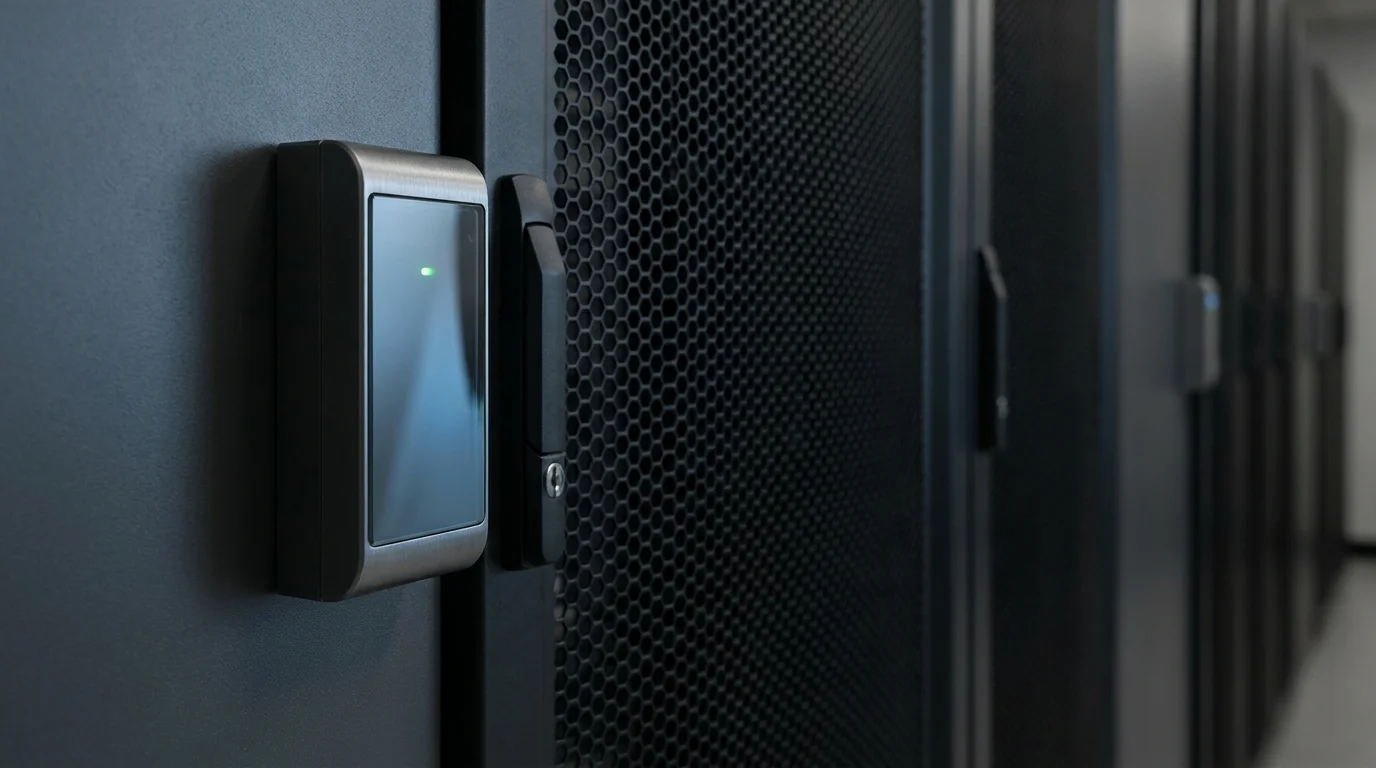
Amanah is SOC 2 Type II certified, and CCPA, GDPR, PIPEDA and PHIPA compliant. Access runs on a Verkada system with rack-level authentication, and data hosted in TOR1 and TOR2 stays in Canada. Under PHIPA, Amanah secures the infrastructure, while the health information custodian remains responsible for how personal health information is collected, used and disclosed. The SOC 2 Type II report and compliance documentation are available on request.
What should you check before colocating at 151 Front Street West?
Before signing, ask each provider in the building the same questions:
- Which carriers, cloud on-ramps and exchange ports are reachable from the exact suite on offer?
- Can you order diverse fibre paths through separate building entry points?
- What power density per rack is available, how is it metered, and how much headroom is there?
- Which audit reports cover that suite (for example SOC 2 Type II), and how recent are they?
- What do cross-connects, remote hands and installation cost, and how long does provisioning take?
- Is there a second suite or site for replication and failover?
For a side-by-side method, read our guide to choosing a data centre inside 151 Front Street, and see the full specifications of Amanah’s 151 Front Street West data centres.
The fastest way to judge a carrier hotel is to stand in the suite.
Book a walkthrough of TOR1 and TOR2, one minute from Union Station, and see exactly where your equipment and cross-connects would live.
Questions about this topic
A carrier hotel is a carrier-neutral data centre building where telecom carriers, internet exchanges, cloud providers and businesses place equipment so they can connect directly with physical cross-connects. It exists for interconnection first and hosting second.
It was built as an office block and wired in 1954 for CNCP Telex lines that ran along the railway. It now operates as a carrier hotel. Several colocation operators run suites inside it, including Amanah’s TOR1 and TOR2.
Every carrier hotel is carrier-neutral, but not every carrier-neutral data centre is a carrier hotel. A carrier hotel is defined by density: hundreds of networks and an internet exchange in one building, so almost any carrier is one cross-connect away.
A meet me room is the secured space in a carrier hotel where carriers terminate their fibre and tenants patch into them with cross-connects. It is the physical point where networks meet.
At Amanah, most cross-connects are complete within 1 to 3 business days after the order is confirmed. Timing depends on the far-end network and any letter of authorization it requires.
No. Each operator in the building runs its own suite, so power density, cooling, compliance reports, carrier access and pricing differ. Compare the specific suite and provider, not the address.