
To choose a colocation provider, stop evaluating the tour and start evaluating the answers. Ten questions separate a facility with real redundancy from one with good marketing: what happens to your equipment during maintenance, whether the redundancy sits in the components or in the distribution paths, what a cross-connect costs next year, and what an SLA breach actually pays you. Ask all ten out loud, and write the answers down.
- The most revealing question is “what happens to my equipment during your scheduled maintenance?” In a facility built to the Tier III standard, the answer is “nothing.”
- Redundant components on a single distribution path are not redundancy. Ask the provider to draw the paths, not describe them.
- The three costs that appear after signing are cross-connect fees and their annual escalators, remote hands billed per incident, and power overages above the committed kW.
- Read the SLA exclusions before the SLA headline. Planned maintenance is usually carved out of the uptime number.
- Compare providers on one all-inclusive monthly figure, never on the rack line.
- Amanah at 151 Front Street West: 100% network uptime SLA, 99.99% facility power and network availability, 400+ reachable networks, up to 25kW per rack, SOC 2 Type II, PIPEDA and PHIPA, one-year terms.
Every colocation provider will tell you they’re reliable. The contract is where you find out what that word actually costs, and what it actually covers.
What is a colocation provider?
A colocation provider rents you space, power, cooling, and network connectivity inside a data centre it owns or operates, while you keep ownership and control of the servers. You are buying the facility and the uptime, not the hardware. Pricing is usually per rack or cabinet against a committed power draw in kilowatts, on a one to three year term.
That last detail is why these ten questions matter. A colocation contract is a multi-year commitment to somebody else’s electrical and cooling design, and the cost of picking wrong is not the monthly bill.
Why every colocation provider sounds the same until you ask for specifics
The cost of choosing wrong is the migration you have to do twice, the outage you did not think you were exposed to, and the cross-connect fee that shows up on month four. The sales conversation is where every provider looks equivalent. The specifics are where they stop being equivalent.
These ten questions come from what customers actually get burned by. Ask them out loud, on the tour, and write down the answers. A provider that has built the thing properly will answer immediately and specifically. A provider that has not will answer in adjectives.
1. What happens to my equipment during your scheduled maintenance?
The correct answer is “nothing happens to your equipment.” This is the single most revealing question you can ask, because it tests one property: whether power and cooling are concurrently maintainable. In a facility built to the Tier III standard defined by the Uptime Institute, every critical component can be pulled for service without removing power from the load it serves.
Red flag: any version of “we’ll give you advance notice of the maintenance window.” That means the redundancy is on paper, not in the distribution paths. A maintenance window is a scheduled outage with a polite name. Our breakdown of what the Tier III standard actually requires covers how to verify the claim rather than take it.
2. Is your redundancy in the components, or in the distribution paths?
These sound similar and are not. Redundant components on a single path, such as two UPS units feeding one bus, still leave you exposed the moment that path is serviced or faults. Redundant, independent paths mean a fault on one never reaches the other. Ask them to draw it, not describe it.
| Scenario | Redundant components, one path | Redundant, independent paths |
| Normal operation | Protected | Protected |
| Single component fails | Usually protected | Protected |
| The distribution path faults | Exposed | Protected |
| Planned maintenance on that path | Outage window required | No impact to your load |
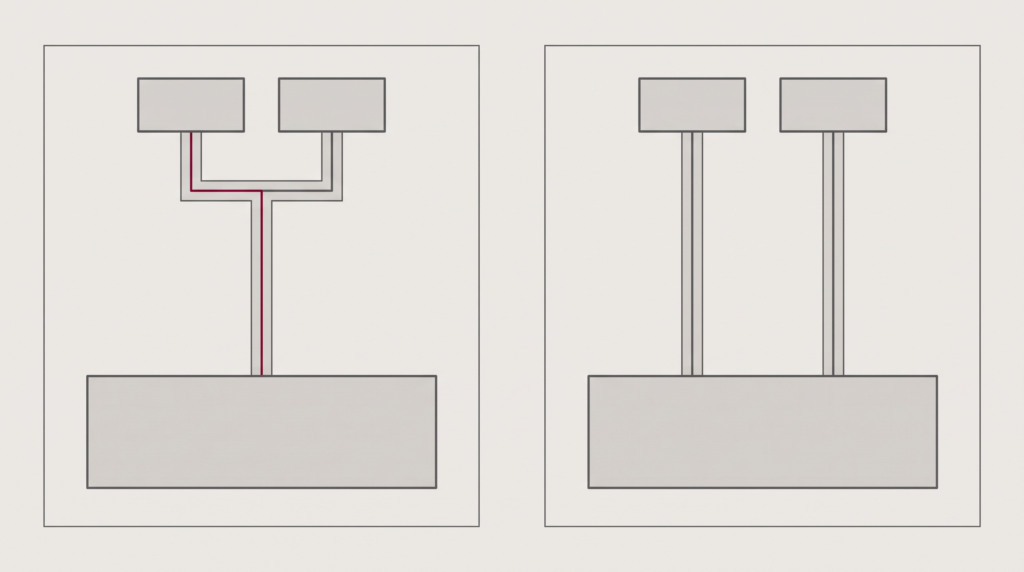
At 151 Front: N+1 redundancy across power, cooling, and network, on independent distribution paths, with UPS and diesel generator backup and Enwave deep lake water cooling.
3. Are you carrier-neutral, and how many networks can I actually reach?
A carrier-neutral data centre lets you choose your network providers, change them without moving hardware, and multi-home across them. A facility owned by or tied to a single carrier gives you one commercial relationship and one negotiating position. Ask for the number of reachable networks and whether there is direct exchange peering on-site.
At 151 Front: 400+ reachable networks, carrier-neutral, with a 5-carrier multi-homed network (Beanfield, Cogent, Zayo, NetActuate) and TorIX peering at 100G.
4. What does a cross-connect cost, and what will it cost next year?
Cross-connects are the classic post-signature surprise. Some providers price the rack aggressively and then monetize every physical connection into it, with annual escalators buried in the schedule. Get the install fee, the recurring fee, and the escalation terms in writing before you compare quotes. Amanah publishes its cross-connect pricing rather than quoting it case by case.
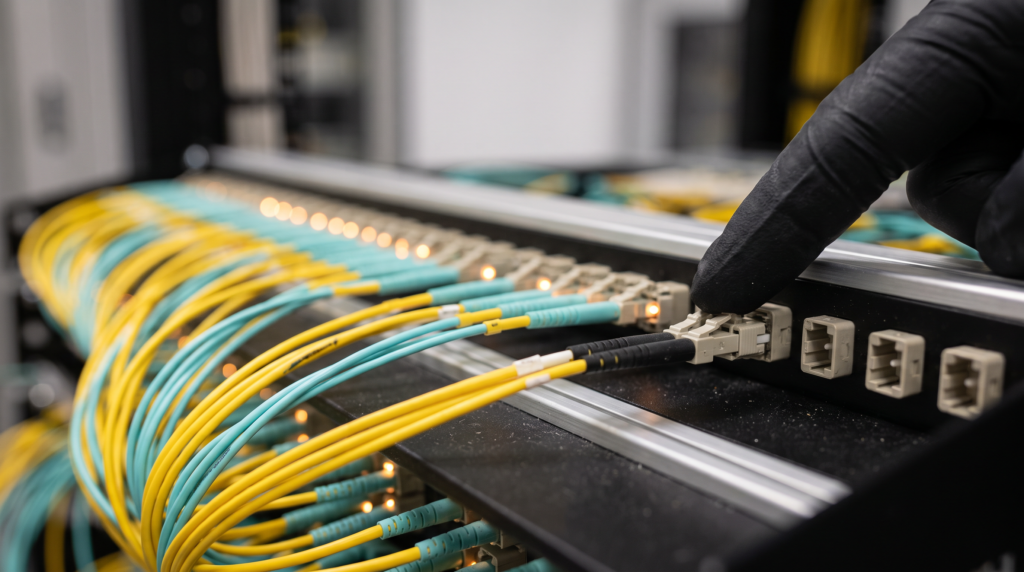
Red flag: a cross-connect price that is quoted verbally or “handled case by case.” That is a price that goes up.
5. Is the bandwidth metered, and what exactly triggers an overage?
“Unlimited” and “unmetered” are used loosely. Ask for the port speed, whether billing is on 95th percentile or committed rate, what happens when you exceed it, and whether a fair-use clause can throttle you. If the answer requires a footnote, the bill will too.
At Amanah: unmetered bandwidth with no overage fees and no data caps, from 1Gbps up to 100Gbps uplinks. We were the first provider at 151 Front to offer 100Gbps unmetered.
6. What is the power commitment, and how am I billed if I exceed it?
Rack pricing is really power pricing. Confirm the committed kW per rack, whether it is billed on actual draw or on breaker capacity, and the per-kW rate above the commitment. Then confirm you can increase it later without relocating your equipment, because growing into a power ceiling is a migration nobody budgets for.
Ask directly: “if I need another 4kW in eighteen months, do I stay in this rack?” At 151 Front we support up to 10kW per rack in TOR1 and up to 25kW in TOR2, with 208V and three-phase available, and high-density colocation for racks that outgrow a standard footprint.
7. Who physically touches my hardware, and how fast?
Remote hands is the difference between a five-minute reboot and a two-hour drive downtown at 3am. Ask whether staff are on-site around the clock or on call, what the response commitment is, how remote hands is billed, and how much is included. Then ask what actually happens at 3am on a holiday.

At 151 Front: 24/7 on-site staff and monitoring, remote hands available around the clock, and 24/7 unescorted client access via card or Bluetooth.
8. What is in the colocation SLA, and what does a breach actually pay me?
Almost every provider advertises high availability. Fewer will tell you how uptime is measured, what is excluded (planned maintenance usually is), how a credit is claimed, and what that credit is capped at. Ask for the network SLA and the facility power SLA separately, because they are different systems with different failure modes, and a single blended number hides which one is weaker.
At Amanah: a 100% network uptime SLA backed by redundant network paths and multiple power feeds, plus 99.99% facility power and 99.99% network availability in the colocation SLA. Independently audited: SOC 2 Type II, PIPEDA, and PHIPA, with 100% Canadian data residency.
9. What is the total monthly cost, with nothing left off?
Build the real number before you compare colocation pricing between providers: rack space, committed power, bandwidth, cross-connects, remote hands, IP allocation, setup fees, and any escalator. Quotes that look cheaper on the rack line frequently land higher once the connections and the hands are priced in. Ask for one all-inclusive figure and make them stand behind it.
At Amanah: one predictable all-inclusive monthly rate, no surprise fees, and we will beat any comparable colocation quote by 10%.
10. What is the term, the renewal, and the exit?
The end of the contract matters as much as the start. Confirm the initial term, whether it auto-renews and at what price, the notice period required to leave, and whether there are de-installation or exit fees. A provider confident in the service does not need a multi-year lock-in and a punitive exit to keep you.
At Amanah: one-year colocation terms, no multi-year lock-in required to get started.
- 100% network uptime SLA, multi-homed across 5 carriers
- 99.99% facility power and network availability, SOC 2 Type II
- 10% we will beat any comparable colocation quote
What a strong answer sounds like, and what a red flag sounds like
You do not need a facilities engineer to evaluate the responses. Specific, immediate, and numeric means the provider has built the thing and knows it. Vague, conditional, or deferred to a follow-up email means they are either working it out as they go or hoping you will not press.
| Question | Strong answer | Red flag |
| 1. Scheduled maintenance | “Nothing happens to your equipment.” | “We give advance notice of the window.” |
| 2. Redundancy | Draws two independent distribution paths | “Fully redundant, enterprise-grade” |
| 3. Carrier neutrality | Names the count and the exchange peering | “We work with all the major carriers.” |
| 4. Cross-connects | Install fee, recurring fee, escalator in writing | “Handled case by case.” |
| 5. Bandwidth | Port speed, billing method, no fair-use throttle | “Unlimited” with a footnote |
| 6. Power | Committed kW, per-kW overage rate, room to grow | “Most customers never hit the limit.” |
| 7. Remote hands | On-site 24/7, stated response commitment | “On call, usually pretty quick.” |
| 8. SLA | Separate power and network numbers, exclusions named | One blended availability figure |
| 9. Total cost | One all-inclusive monthly number | A low rack rate and “we’ll sort the rest” |
| 10. Term and exit | One-year term, stated notice period, no exit fee | Multi-year lock-in and auto-renewal at market |
Watch for three patterns in particular:
- Adjectives instead of architecture. “Fully redundant” and “enterprise-grade” are free to say. Ask which components, on which paths.
- Prices that live outside the quote. Cross-connects, remote hands, and power overages are the three most common places a cheap rack rate gets made up later.
- An SLA that excludes the thing you are worried about. If planned maintenance is carved out of the uptime number, the uptime number is not describing your experience.
The one question underneath all ten
Every question on this list is a version of the same one: what specifically has to fail, simultaneously, for my equipment to go down? A facility built to the Tier III standard answers that with “two independent failures at once.” A facility with redundant parts on a single path answers it with “one, during maintenance.” That difference is the entire reason the tier standards exist, and it is the difference you are actually buying.
Amanah’s colocation at 151 Front Street West is built to the Tier III standard across power and cooling, with concurrent maintainability on both. That is what lets us commit to a 100% network uptime SLA, 99.99% facility power availability, and zero outage windows for planned maintenance, and back it with SOC 2 Type II, PIPEDA, and PHIPA compliance. Ask the rest of your shortlist to be equally specific.
Bring this to the tour
- Ask all ten, out loud. Written answers are polished. Spoken ones tell you whether the person knows their own facility.
- Ask to see the power room. Redundant paths are visible. A provider that will not show you them is answering the question anyway.
- Get one all-inclusive number. Rack, power, bandwidth, cross-connects, hands. Compare providers on the total, never the rack line.
- Read the SLA exclusions first. Start at what is not covered. That section describes the outages the provider expects to have.
Ask us all ten. In person, in the power room.
Bring the list to 151 Front and we will walk you through the redundant power and cooling paths while we answer it. No commitment, no pressure, no adjectives.
Questions About Choosing a Colocation Provider
“What happens to my equipment during your scheduled maintenance?” It tests concurrent maintainability, which is the requirement most providers who claim redundancy have not actually built. The answer should be “nothing.”
Cross-connect fees and their annual escalators, remote hands billed per incident, and power overages when the committed kW is lower than your real draw. Get all three quoted in writing and build a single all-inclusive monthly number before you compare providers.
A lot. Check the initial term, the auto-renewal price, the notice period to leave, and any exit or de-installation fees. Amanah runs one-year colocation terms with no multi-year lock-in, because the service should keep you rather than the paperwork.
Yes. It means you pick and change network providers without relocating hardware, and you can multi-home so no single upstream is a dependency. At 151 Front that is 400+ reachable networks with direct TorIX peering at 100G.
A 100% network uptime SLA on dedicated servers, backed by redundant network paths, multiple power feeds, and 24/7 monitoring, plus 99.99% facility power and network availability on colocation. Operations are independently audited under SOC 2 Type II, and we are PIPEDA and PHIPA compliant with 100% Canadian data residency.
With colocation you own the servers and rent the facility, so you control the hardware, the refresh cycle, and the cost curve. With cloud you rent the compute and the provider controls all three. Colocation costs are fixed and predictable per rack; cloud costs scale with usage and tend to rise with it.
Colocation pricing is driven mainly by committed power, not floor space, so compare per-rack quotes at the same kW commitment. Then add cross-connects, bandwidth, remote hands, IP allocation, and setup fees to reach the real monthly figure. Amanah quotes one all-inclusive monthly rate and will beat any comparable colocation quote by 10%.